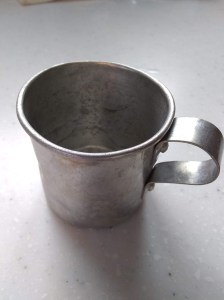
Post-war Germany was a virtual wasteland of twisted metal, glass shards reflecting the sun like so many sheets of ice, and rubble everywhere. You could not walk without stepping on something that would likely cut through the sole of your worn-out shoes. I remember images of abandoned wartime metal containers filled with fetid water. The shells of burned-out cars parked permanently in Helter-skelter dissonance.
Everything seemed either grey, black or rust. In the five-plus years that our family lived in Germany, we lived in eight different Displacement Persons Camps. Thankfully, by some dumb luck or providential intervention, we landed in the English Zone. After the war, Germany was divided into four separate zones, run by Britain, France, the US, and the Soviet Union.
The Latvians who found themselves in the Russian Zone were not as fortunate as the rest of us. For an insight into what life was like for refugees in the Russian Zone, I sincerely suggest that you read “A Woman in Amber,” by Agate Nesaule whose New York Times bestseller, in my opinion, is the most compelling and accurate depiction of the fate of too many Latvians who unfortunately found themselves captive to Russian brutality.
Because we were in the English Zone my Father served in the Allied reconstruction effort as a truck driver wearing a British uniform as a member of what was known as the “Black Army,” a reference to their black uniforms. They did not carry weapons but rather worked to rebuild a shattered and devastated Germany.
My father was gone during the work week but would return on the weekend. Every few weeks he would bring home a most welcome surprise. A German pastry filled with sweet cream. Oh how incredibly wonderful that was! My mouth waters even as I write these words more than 70 years later.
My mother worked in a German factory that made aluminum suitcases as that was the only metal available immediately after the war. Because they both had to work I was dropped off at an acquaintances house during the day. That caused me such trauma that to this day I suffer from separation anxiety. At age 74 I still experience anxiety and fear from those early experiences. I can only begin to imagine how much worse, how horrific and inhumane it is to separate children from their parents at our southern border. That is a crime beyond comprehension and we as Americans should be deeply troubled and ashamed that our government is causing that to happen.
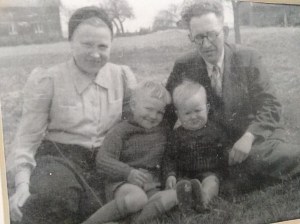
There are other stories from the first five years of my life but those are for another time. This story is about a little tin cup and what it still means to me.
Once a week all the children were asked to form a line in the city square and the kind people of the city would give each child a tin cup of warm milk and a small piece of dark bread with sardines. This kindness was practiced even though the citizens of the city themselves were suffering the ravages of war and food was very scarce. I shall never forget the smell of the milk and sardines, the dark bread that filled my empty stomach and the warmth of holding the tin cup in my hands.
The rest of the week each family struggled to get by with whatever they could find. I remember that a delicious daily staple for many including us was the fat and bits of burnt bacon that are left in the pan after local residence had fried their meal. When the pan cooled the mixture of lard and bacon bits was spread on dark rye bread, and it was heavenly.
Today, some people would consider it garbage, but for us, it was manna from heaven! It really is all about perspective, isn’t it? That little tin cup has helped form my ethics, morality, compassion, empathy, and gratitude that in the midst of horrible circumstances, in the midst of poverty and desperation, there are moments of grace and abundance that you carry with you the rest of your life.
I grieve for my fellow Americans who cannot understand or identify with people who are living in horrific situations in so many parts of the world and desperate to find safety and freedom as we did on April 4, 1950. They are impoverished because they lack the gift of understanding what it means to be on the very edge of non-existence and then to find safety and freedom. It is heaven. It is grace.

 Just Janis
Thank you!
LikeLike